
Costa da Caparica is Lisbon's long Atlantic escape: a fishing coast, a surf coast and a place where a city day can end with sand on your feet. South of the bridge, the beaches run for kilometres, changing from busy town breaks to wider stretches backed by dunes and the Arriba Fóssil cliffs.
It is one of the easiest places to surf near Lisbon, but not one simple wave. Sandbanks move, wind changes through the day and each beach has its own rhythm. This guide is a practical way to read the coast, choose a suitable starting point and understand the scenes behind the Costa da Caparica collection.
Where to surf: choose the beach, not just the forecast
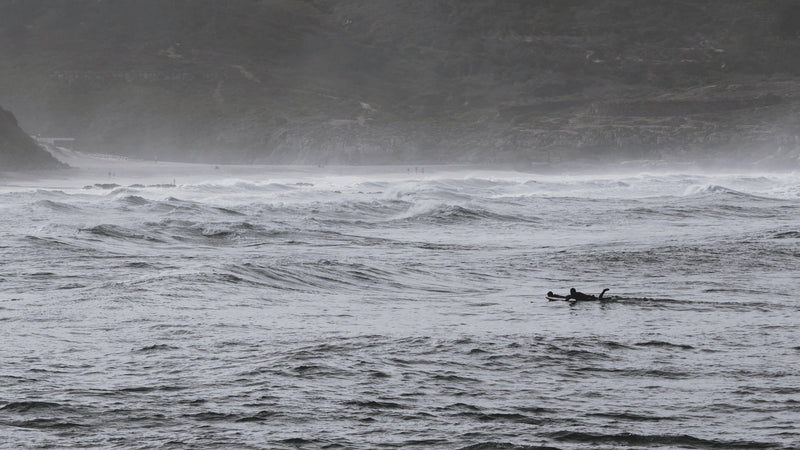
Caparica is a long beach-break coastline. That means there is room to spread out, but it also means the best peak can move after a run of swell. Take time to watch the water before carrying your board down.
São João for an easy start
Near town, São João is a useful place to understand the coast. It is close to cafés, surf schools and the main beach life, which makes it a sensible first stop for visitors. On smaller, cleaner days the sand-bottom waves can be approachable, but beginners should still go with a school or an experienced friend and follow the lifeguard conditions.
CDS for the centre of the action
CDS sits in the urban stretch of Caparica and has long been part of the local surf map. It is lively, exposed and worth checking when you want to see how the banks are working that day. The atmosphere is more energetic than secluded, with surfers, beachgoers and the town all close by.
Fonte da Telha for space and a slower coast
Further south, Fonte da Telha feels different. The fishing village, long sand and fossil cliffs open the view up. It can be a good option when the northern beaches are too powerful, but it is still the Atlantic: rips, changing banks and bigger winter days deserve respect. The appeal is the room to walk, watch and find a quieter stretch of beach.
When to go: let the season set the pace
Autumn and winter bring stronger Atlantic swells and more consistent surf. They are also the months when Caparica asks for more judgment: currents can be stronger, banks change quickly and a familiar beach can look very different from one day to the next.
Spring often brings longer, calmer days and enough movement in the water to keep the coast interesting. Summer is about softer sessions, lessons, beach life and late afternoons that run into dinner. Conditions are never guaranteed, so a local forecast and a look from the sand matter more than a fixed rule.
Before you paddle out
- Watch first. Give yourself ten minutes to identify the peaks, a safer entry and any obvious current.
- Choose your level honestly. A beach break can be friendly on one day and heavy on the next. If you are learning, use a local school.
- Respect the shared beach. In summer, swimmers, learners and surfers often use the same stretch of water. Leave room and follow lifeguard guidance.
- Keep the forecast local. Tide, wind and banks matter together. Ask at a school or surf shop if you are unsure.
Caparica is not a single spot to tick off. It is a coast to read slowly: the wind, the sand, the light and the people already in the water.
After surf: fishing culture, beach bars and the last light
The coast is shaped by more than boards. Fishing remains part of its identity, from boats on the sand to the traditional arte xávega net fishing you may still see along the beaches. That coexistence is part of what makes Caparica feel lived in rather than built only for visitors.
Near town, the day can move easily from a surf check to coffee, grilled fish or a walk along the sand. Further south, Fonte da Telha is made for the slow version of the same plan: cliffs behind you, Atlantic in front and the sun lowering over a very long beach. For a different surf coast, read our Ericeira Surf Guide.
The drawings: scenes from a coast with many moods
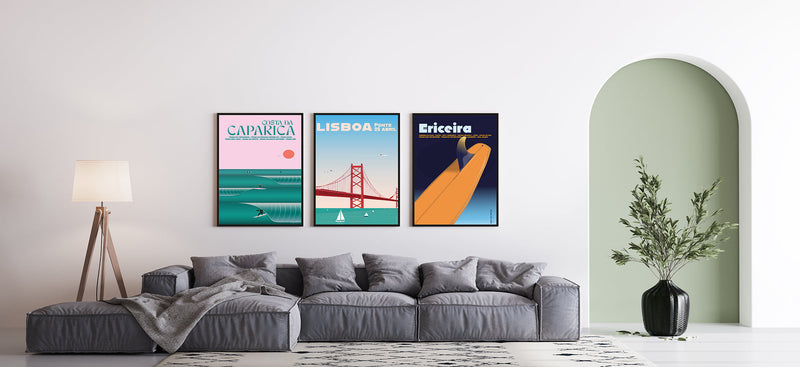
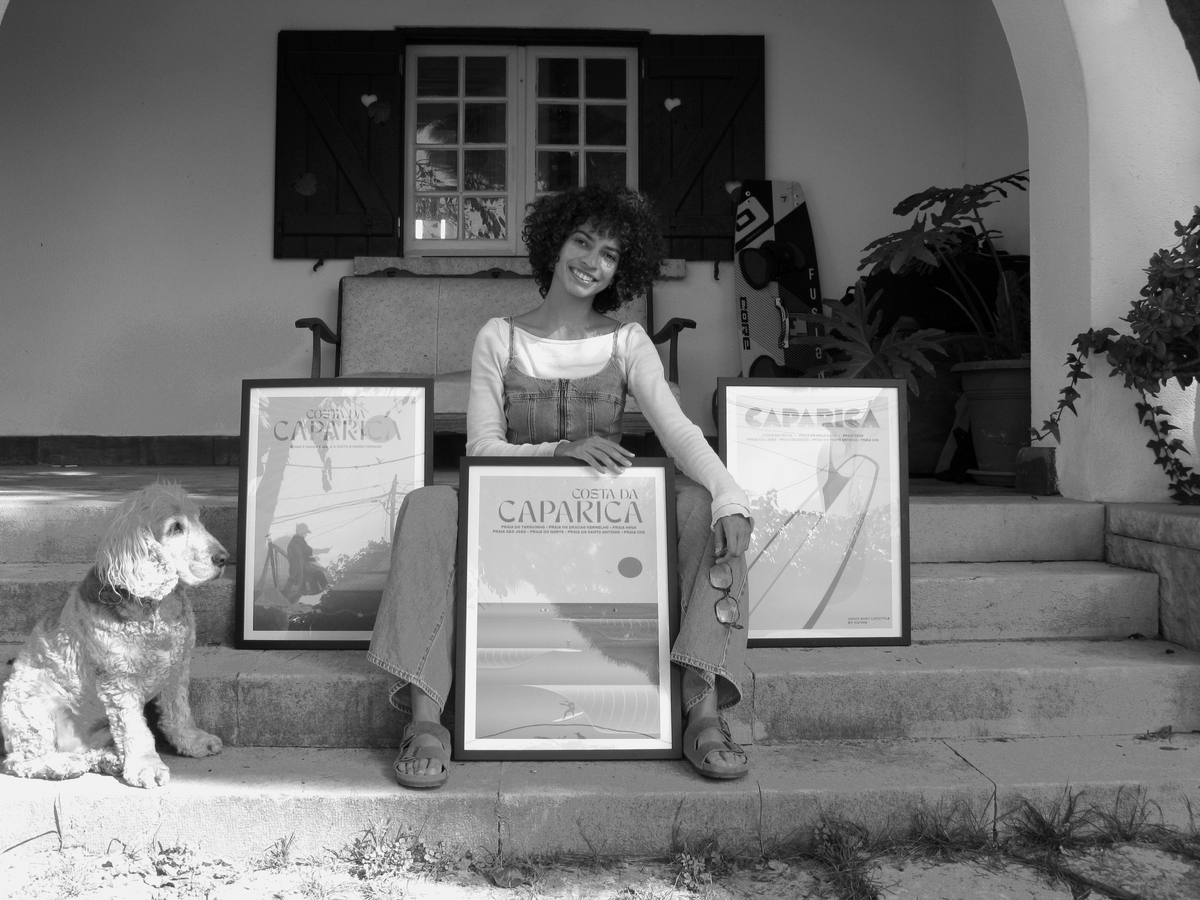
The Caparica collection is not built around one postcard view. The barrel wave comes from changing sandbars and autumn light. The fisherman belongs to the working beach that existed before the surf schools. Beach Life and Dia de Praia hold onto the quieter hours, when towels, beach bars and warm water become the whole day.
That is why the works sit together naturally: they are different moments from the same coastline. If the barrel is the scene you recognise, you can also see it ready to hang in its framed edition. For the wider story, explore every piece in the Costa da Caparica collection.
Quick answers
Is Costa da Caparica good for beginner surfers?
It can be, especially on smaller and cleaner days, but conditions change across the coast. A local surf school is the best starting point for a first session.
Which part of Caparica is quieter?
The coast generally opens up as you travel south. Fonte da Telha offers more space, but accessibility and conditions should always be checked on the day.
When are the waves strongest?
Autumn and winter usually bring the stronger Atlantic swells. Those conditions suit experienced surfers more often than first-time visitors.
What makes Caparica different from Ericeira?
Caparica is a broad, sandy coastline close to Lisbon, with beach breaks and a strong everyday beach culture. Ericeira is a cliffside surf town known for its named reef and point breaks.
 Caparica Barrel Wave Poster
 Caparica Fisherman Poster
 Caparica Surf Girl Poster
 Framed Caparica Barrel Poster